Synopsis
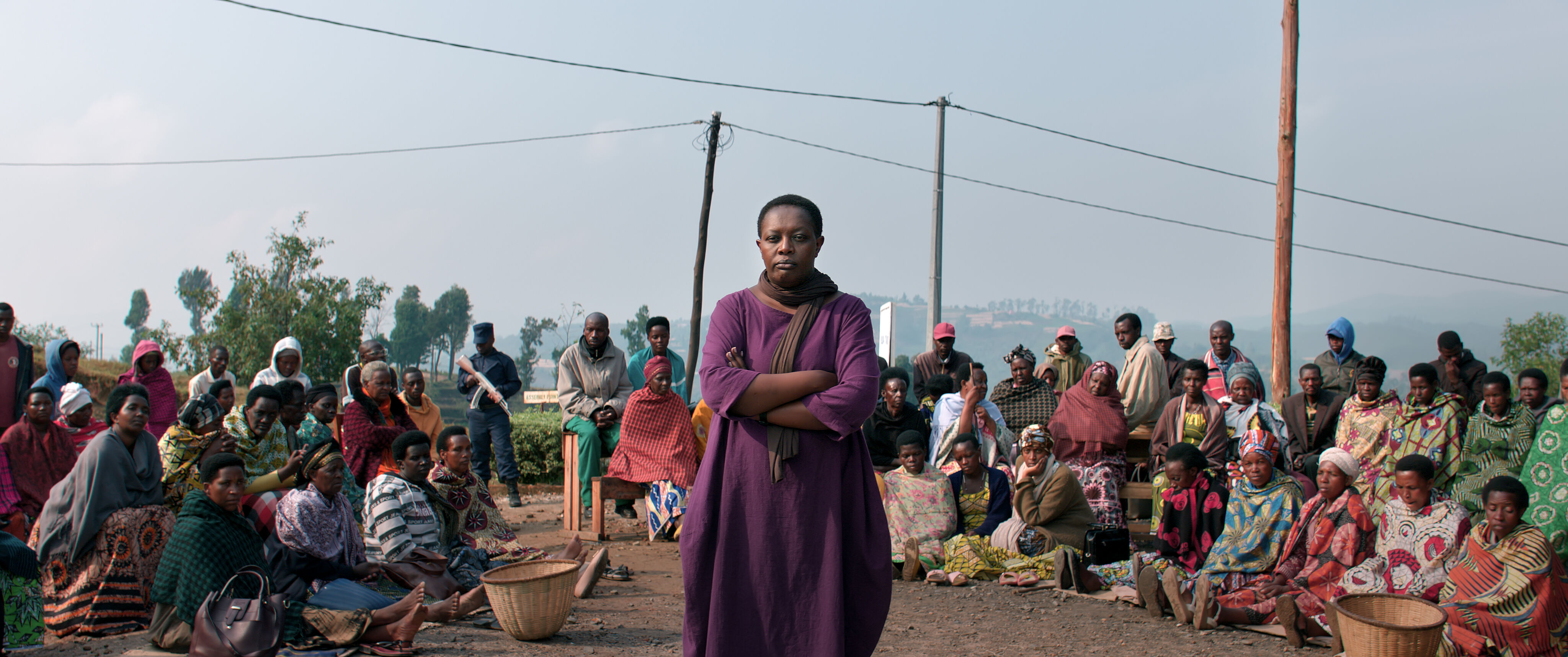
Rwanda, 2012. Following the genocide against the Tutsis, people’s tribunals are set up to bring about justice and reconciliation. Vénéranda, a survivor, is convinced of the need for these trials. Despite pressure, she organises discussion sessions between victims and the families of the perpetrators. But when she learns of her daughter’s unexpected pregnancy, she is forced to confront her own contradictions and the dark aspects of her past.
About
Selection, Un Certain Regard, Cannes 2026: Caméra d’Or / FIPRESCI Prize (International Critics’ Prize)
‘I made this film because I wanted to pay tribute to the women of my country, to those mothers who are at the heart of a whole nation’s healing. These mothers who, through mistakes and unspeakable suffering, have found the strength to stand tall, with dignity. And more than that, who have found within their hearts the capacity to give of themselves, to forgive and to move forward — even imperfectly, even painfully, even sometimes without succeeding. That humanity, that bravery, deserves to be celebrated. […] Making a debut film is like taking a leap into the unknown. But when you’re surrounded by such a strong film family, you don’t fall: you soar. Thank you to the Cannes Film Festival for giving wings to our first steps. Thank you to my country, Rwanda.”
Marie-Clémentine Dusabejambo
Historical background
GACACA (pronounced ‘Gatchatcha’), which literally means ‘soft grass’ in Kinyarwanda, refers to ‘the place where people gather’. The Gacaca people’s courts were established in Rwanda between 2005 and 2012 to try thousands of people accused of crimes of genocide and crimes against humanity committed between 1990 and 1994.
Originally, the Gacaca were used to settle neighbourhood or family disputes in the hills. They were a form of justice of the peace, without lawyers and far removed from modern judicial practices: a village assembly chaired by elders, where anyone could ask to speak.
Post-genocide Rwanda opted for this judicial policy, which drew on a ‘traditional’ model, due to the unique nature of the genocide against the Tutsis – a genocide planned at the very heart of the political-military hierarchy, and whose execution involved the participation of the population on a massive scale.
How could all those responsible for and involved in carrying out the genocide be brought to justice? How could non-violent coexistence between victims and perpetrators be ensured? How could the memory of the genocide be managed if these horrors were left unspoken? How could a shared historical narrative be established?
These are the questions facing Rwandan society in the aftermath of the Tutsi Genocide. The Gacaca courts thus emerged as a historiographical endeavour concerning the Genocide, going beyond their judicial and reconciliation objectives.