Synopsis
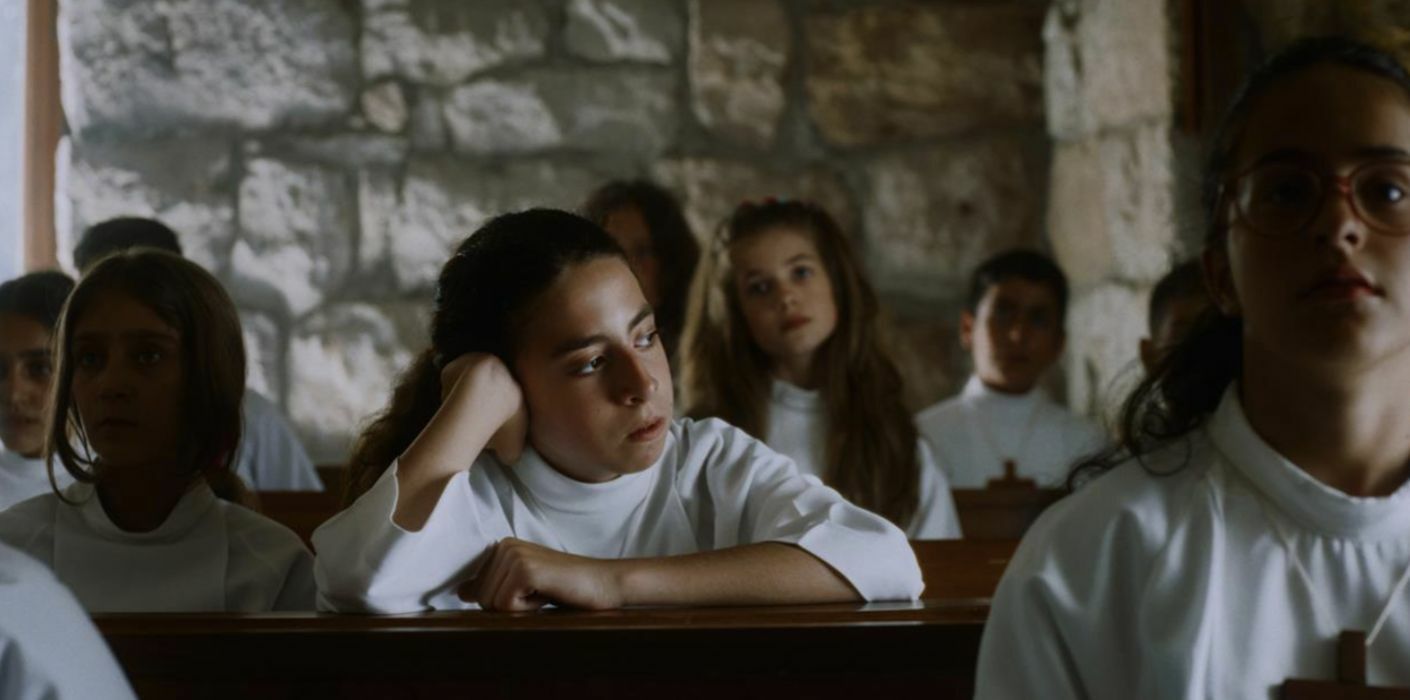
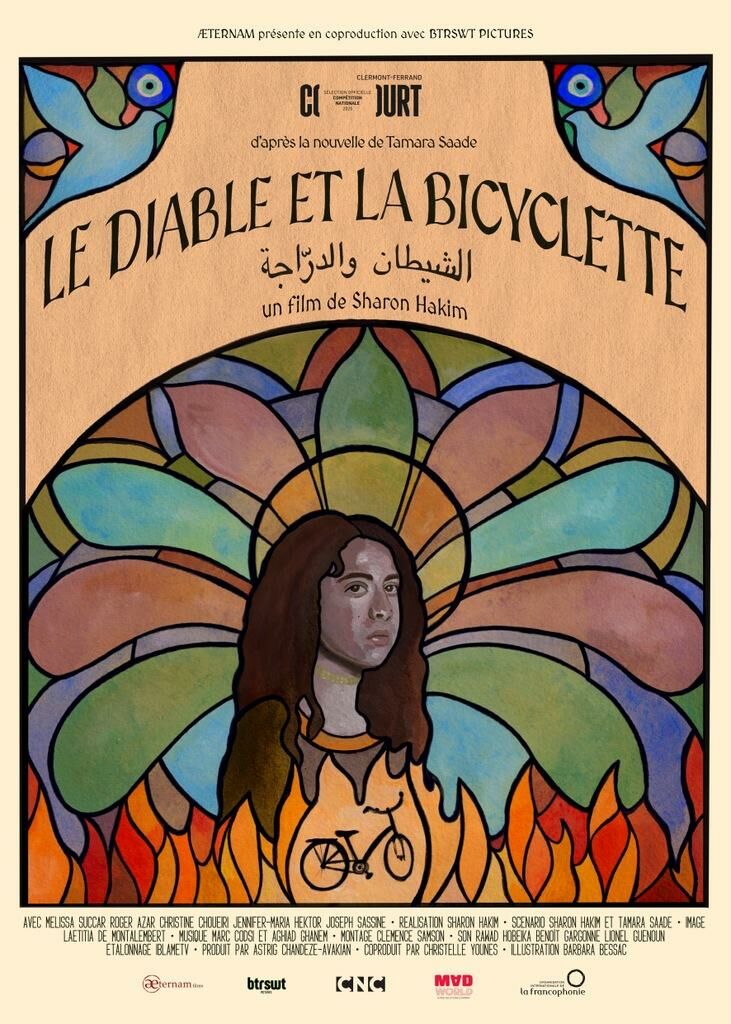
Yasma, a 13-year-old Lebanese girl from a mixed-faith marriage, is preparing for her First Communion. But as she awakens to her sexuality, a ritual of a completely different kind takes hold.
About
DIRECTOR’S NOTE
In *The Devil and the Bicycle*, one of the main challenges of the direction is to remain faithful to the highly subjective perspective of a 13-year-old girl. Yasma is present in every scene of the script, unless they spring directly from her imagination. To bring these scenes to life, I intend to position my camera at the height of her gaze as she looks at the world around her, and never stray from that perspective. With the support of the voice-over by Yasma as an adult, and the insight she brings to the story, I aim to create a contrast that highlights the innocence of her perspective as a young teenager.
In this intimate visual world, the father’s role is quite unique. His face never appears in the frame (hidden by the framing, by backlighting where he appears as a silhouette…). What this ‘faceless father’ conveys, rather than explaining, is that he never looks at her with a father’s loving gaze. He is a shadow in her life (when he passes in front of her bedroom as a silhouette), or the punishing hand (when only his hand enters the frame and strikes Yasma’s cheek violently), akin to the hand of God in the Old Testament.
Conversely, Selim, the bicycle repairman and the ‘Repairer of Yasma’s Self-Esteem’, is always filmed in the light (he also always appears outdoors, by day, in natural surroundings). This lighting reinforces his role as a Messiah in Yasma’s life: the one who heralds that a life of pleasure and love is possible. To further emphasise the symmetry between sacred and profane rituals established by Yasma when she goes to the bicycle repair shop every Friday after catechism, I want to play on the rhythm of the editing and the interweaving of scenes depicting the sacred with those depicting the carnal. The host, symbol of the supreme sacred, becomes the receptacle for Yasma’s fantasies and her curiosity about sexuality. It is shown in highly subjective close-ups during the rather intimate ritual in which the priest places the host on her tongue, emphasising the taste buds, the moisture of the saliva, and so on. The sets and lighting will also highlight the similarities between the garage—Yasma’s sensual refuge—and the church—a spiritual temple: the stone walls, the subdued light, the swirls of incense and dust. In the editing, the seamless transition from one setting to another will reinforce the impression that one is an extension of the other, and will further emphasise the dual nature of this ritual—both sacred and carnal.
During the masturbation scenes set in the garage, the direction will focus on the faces and their expressions, and on the atmosphere of this murky, secret place. By employing a style of direction that does not reveal the details of this intimate experience but rather suggests it, the film allows the audience to sense rather than see. This choice is dictated by a desire not to sexualise the bodies of 13-year-old girls, but also because the significance of these scenes lies in the emotions Yasma is experiencing.
Through the musical editing that reflects the repetition of these masturbatory rituals, I aim to give the film a comic tone. This is comedy of repetition, but also situational comedy: Lebanese stories, owing to the uniqueness of this multilingual and multi-faith culture with its tumultuous political history, are brimming with strangely comic situations.
To highlight the subtlety of Lebanese humour, I am relying on the spontaneity of the lead actress and the cast as a whole – a mix of experienced actors and non-professionals chosen for their charisma and authenticity. Another source of humour and light-heartedness is the rhythm and shifts in tone. These shifts are achieved through editing, but also through the music. For *The Devil and the Bicycle*, I will once again be working with composers Aghiad Ghanem and Marc Codsi, with whom I previously collaborated on my last film, *La Grande Nuit*. For this soundtrack, they will rework ‘Kyrie Eleison’ – traditional religious chants – into more surprising versions: notably in a bossa nova arrangement, and possibly jazz or funk. This departure from the very solemn religious chants will serve to reinforce the light-hearted nature of the script.
Sharon Hakim
Download the full film package, including the script, the directors’ director’s notes, photos and more…